Testimonials
Services
Exclusive 1-on-1 Practical Learning Sessions
Intro & Initial Clarity-Alignment Conversation
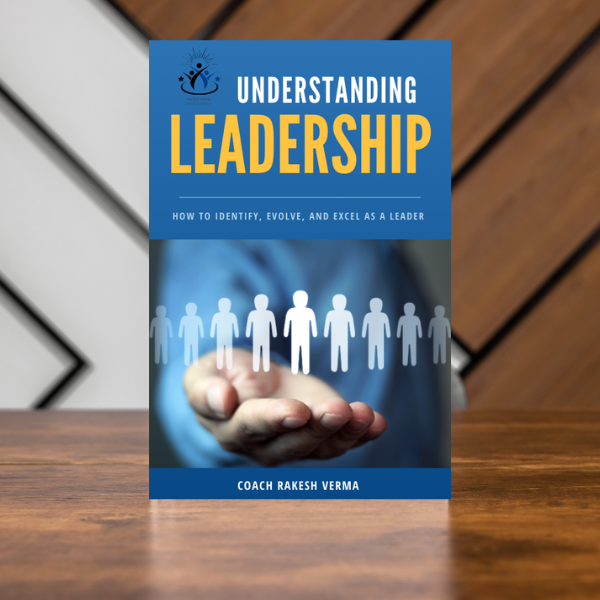
Understanding Leadership Styles That Work
6 Sessions to Clear Goals & Practical Action Plan
Deep-Work Career, Leadership & Life Session
About me
- Rakesh Verma (Coach & Mentor)https://www.coachrakeshverma.com

- It was a privilege to work with Mr. Rakesh Verma—an inspiring leader and mentor whose vision, empathy, and guidance left a lasting impact on my growth and the team's success at Saint Gobain.Recommended by Rajiv Gupta BU Head on

- Thank you Mr. Rakesh Verma for leading by example, mentoring me to grow, and inspiring lasting change. Your support and passion truly shaped my journey—keep shining and creating impact!Recommended by Rahul Singh BU Head on
- Rakesh is a hands-on motivator with sharp time management and clarity. His guidance brings focus during tough times—highly recommend him for both professional and personal growth.Recommended by Sandeep Mahajan on
Frequently asked questions
How to be a first time manager?
The hardest part of being a first time manager is that the skills which got you promoted are no longer the skills the job needs. Your success is now measured by your team's output, not your own, so shift how you spend your time — more one-on-ones, clearer goal-setting and deliberate delegation. Set expectations early instead of trying to be everyone's friend, learn to give direct but respectful feedback, and don't avoid decisions hoping problems will resolve themselves. Give yourself six to twelve months to grow into the role; almost every strong manager was uncomfortable in the first year.
What is first time manager training and do I really need it?
First time manager training is structured learning — through workshops, courses or one-on-one coaching — that teaches new managers what no individual contributor role prepares them for: delegation, feedback, managing former peers, resolving conflict and making decisions under pressure. You likely need it if you notice you're still doing your old job instead of leading, avoiding difficult conversations, or feeling drained by people issues. Since many companies offer such training only after problems surface, proactively working on these skills can save you a full year of painful trial and error.
How should a first time manager handle former peers who now report to them?
This is one of the most common and awkward challenges after a promotion. Address the shift openly instead of pretending nothing has changed — a short, honest conversation with each former peer about what your new role means for how you'll work together goes a long way. Then be scrupulously fair: same standards, same deadlines and same accountability for friends as for everyone else, because perceived favouritism is what destroys trust fastest. You don't have to end the friendship; you just have to stop letting it influence your decisions as a manager.
What is the meaning of mid career crisis?
The meaning of mid career crisis is a phase — typically between the mid-30s and 50s — when an experienced professional starts doubting their direction and feeling stuck, bored or disengaged despite objectively good achievements. It often shows up as Sunday-night dread, loss of motivation, constant comparison with peers, or fantasising about quitting. It isn't a failure; it's usually a signal that your values, strengths and current role have drifted out of alignment. Handled well, it frequently becomes the trigger for a reinvention rather than a breakdown.
At what age does a mid career crisis usually happen?
There is no fixed age, but the mid career crisis age most often reported is between 35 and 45 — roughly when professionals have a decade or more of experience and start measuring their progress against peers and their own expectations. It can hit earlier in high-pressure industries or later, around 50, when people begin weighing legacy and the working years left ahead. The trigger usually matters more than the age: a stalled promotion, burnout, a reorganisation, or a growing gap between what you do daily and what you actually value.
How to overcome a mid career crisis without quitting your job?
Start by diagnosing before deciding — separate a rough patch from genuine misalignment by auditing what energises you and what drains you at work. Within your current job, explore levers like reshaping your role with your manager, taking on a project that restores visibility and learning, or moving to a different team internally. Invest in deepening a strength so your options expand while your income stays safe. Most importantly, get an outside perspective — a mentor or coach can help you tell a values problem apart from a job problem, so quitting becomes a choice made from clarity rather than escape.
I feel stuck in my career and don't know what my next role should be. How do I get clarity?
Feeling stuck usually means you've outgrown an old definition of success but haven't yet articulated a new one. Start with evidence from your own recent history: list the moments in the last two or three years when you felt energised and effective, and identify what they had in common — the type of problem, the people, the autonomy, the impact. Then test directions in low-risk ways — conversations with people already in roles you're curious about, stretch assignments, or a structured clarity engagement with a coach — instead of one dramatic leap. Clarity rarely comes from more rumination; it comes from small experiments plus honest reflection.
What is ICF leadership coaching and why does it matter when choosing a coach?
ICF leadership coaching is coaching delivered by a professional credentialed by the International Coaching Federation, the global body that sets training, ethics and competency standards for the coaching profession. ICF credentials — Associate (ACC), Professional (PCC) and Master (MCC) — require accredited training, supervised practice and logged coaching hours, with Level 2 accreditation indicating training at the depth of the PCC standard. This matters in a market where almost anyone calls themselves a "leadership coach": an ICF credential signals a structured, evidence-based, ethics-bound method rather than generic advice. It doesn't guarantee fit, but it is the simplest quality filter available when shortlisting a coach.
What is the coaching leadership style?
The coaching leadership style is an approach where a leader develops people through questions, feedback and guided self-discovery rather than instruction and direction. Instead of saying "here's what to do," a coaching-style leader asks "what options do you see, what would you try first, and what support do you need?" A simple example: when a team member brings you a problem, you resist solving it on the spot and instead walk them through how they would solve it — building their judgment rather than their dependence on you. It takes more time upfront than a directive style, which is exactly why it is emphasised so heavily in good first time manager training.
What topics are covered in leadership coaching?
The most common leadership coaching topics include transitioning from individual contributor to leader, building confidence and leadership presence, decision-making and overcoming hesitation, delegation and feedback, managing former peers and difficult stakeholders, and increasing influence and visibility with senior leadership. Deeper engagements also work on self-awareness — values, strengths and behavioural patterns — so leaders make conscious decisions instead of reactive ones, especially under pressure. A good coach doesn't run a fixed syllabus; the topics are shaped by whether you're a first-time leader finding your footing or a mid-career professional navigating a transition.
How long do leadership coaching programs usually last?
It depends on the depth of change you're after. A single deep-dive session can address one specific challenge or decision; a short structured series of around four sessions suits someone needing a direction reset; and full leadership coaching programs typically run 8 to 12 weeks when the goals involve clarity, confidence, decision-making and leadership presence. Behaviour-change work that includes stakeholder feedback and measurable change usually runs 6 to 12 months. If you're unsure what depth you need, start with a discovery call — a good coach will tell you honestly whether you need a long program or just a few focused sessions.
Can I work with a leadership coach online, or should I keep searching for leadership coaching near me?
For one-on-one coaching, online video sessions have become the default and are just as effective as in-person work — the substance of coaching is the conversation, not the room. Searching for leadership coaching near me limits you to whichever coach happens to sit in your city, while working online lets you choose based on what actually predicts results: credentials, real corporate leadership experience and personal fit. In-person still adds value for team workshops and offsites, but for your own weekly or fortnightly sessions, choosing the best-fit coach beats choosing the nearest pin code.
What is the difference between a career coach and a mentor?
A mentor is usually a senior person from your own industry or organisation who shares advice from their personal path, makes introductions and shows you how things work — often informal and free. A career coach is a trained professional who helps you arrive at your own answers through structured questioning, frameworks and accountability, with a focus on your clarity, confidence and decisions. If your main gap is insider knowledge of your field, find a mentor; if you feel stuck, doubt your direction, or keep repeating patterns that hold you back, coaching usually works better. Many professionals benefit from both at different stages.
How much does leadership coaching cost in India?
There is no single rate card: group programs and workshops sit at the lower end, while one-on-one sessions with experienced, credentialed coaches typically cost several thousand rupees per session. Structured engagements — an 8 to 12 week program or a 6 to 12 month behaviour-change process — are usually priced as packages, and ICF-credentialed coaches with real corporate leadership backgrounds charge more than newly certified ones. Most established coaches offer a discovery call first; use it to ask exactly what the fee covers, how many sessions are included and what outcomes you can expect. Judge the price against the specificity of the outcome — a stalled promotion or a confident transition is usually worth far more than the coaching fee.
Is leadership coaching worth it for mid-career professionals?
Coaching delivers the most value at transition points — a first significant leadership role, a plateau after years of steady growth, or the realisation that the next decade of your career shouldn't be a repeat of the last one. It works when you bring a real challenge and are willing to act on what you uncover; it disappoints when you expect someone to hand you a ready-made career map. The returns professionals typically report are calmer and faster decision-making, better stakeholder relationships, restored confidence and a clear answer to "what next" — outcomes that compound for the rest of your career. If you're on the fence, a single discovery or clarity session is usually enough to judge whether coaching is right for you.